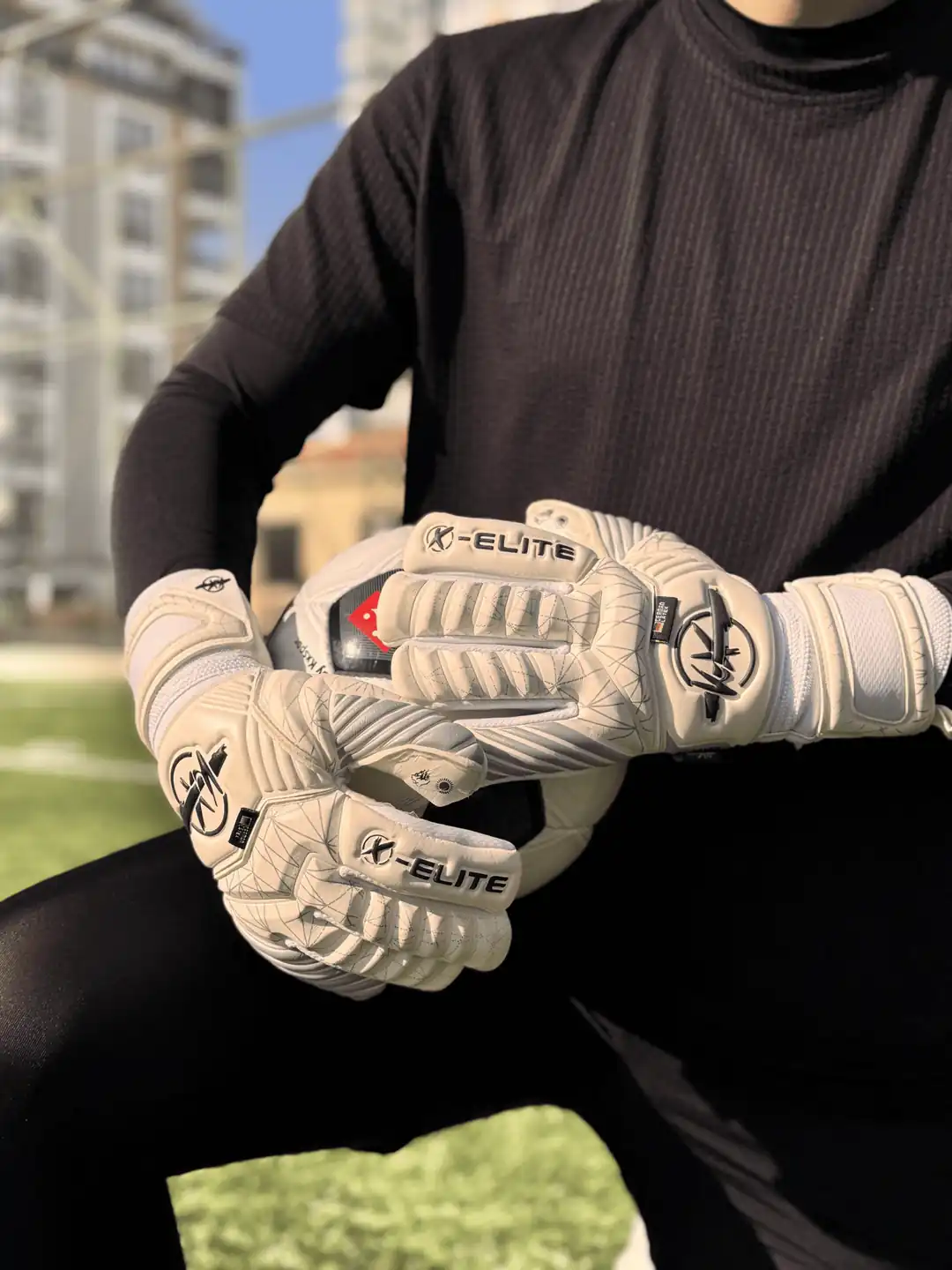
Choosing goalkeeper gloves is a decision with several factors: it affects ball feel, your training routine, equipment budget and confidence on the pitch. Two models that look similar can differ greatly in cut, latex, sizing, wrist system and surface suitability. The right glove is therefore not automatically the most expensive or the stickiest. It is the one that best matches your hand shape, level and playing conditions. This guide helps you base the decision on practical criteria rather than advertising alone.
Quick answer
Do not choose goalkeeper gloves by design or price alone. Assess hand measurements, playing level, surface, weather, cut, palm latex and wrist construction together. Strong grip may be the priority for matches, while intensive training and artificial surfaces call for a balance between grip and durability.
Start with the intended use
A goalkeeper playing once a week on an artificial pitch may not need the same gloves as someone training at professional-league intensity. Ball feel and grip take priority in match gloves, while resistance to repeated surface contact matters more in training. Establish whether you are buying for matches, training or mixed use. Assessing the KXSPOR range against your level and routine is more useful than choosing the most popular model alone.
Correct sizing is fundamental
The glove should not leave excessive space at the fingertips, bunch in the palm or slip at the wrist. An overly tight glove restricts finger movement; a loose one can reduce control and grip precision. First find out which measurement the model's chart requires. Do not substitute width, circumference and length for one another. Cut can also affect fit: a negative cut may feel closer, while a flat cut may feel roomier.
Consider cut, latex and surface together
A negative cut offers close-fitting ball feel, while hybrid cuts can combine a broad contact area with a snug fit. Roll finger constructions wrap latex around the fingers. The surface you play on matters alongside the palm material. Soft latex with strong grip may help match performance but can wear faster on hard artificial grass. Do not assume identical use expectations for natural grass, artificial grass and short-pile turf.
Do not overlook the wrist, body and finger protection
A wrist strap helps secure the glove; strapless constructions may offer a lighter, more natural wrist feel. The effect of finger supports on movement and comfort varies between people, and they do not guarantee complete injury prevention. They can also change ball feel and finger flexibility. Look for a model that lets you feel confident while retaining natural movement.
Answer four questions before buying
- On which surface, and how many times a week, will I use the gloves?
- Have I taken the hand measurement required by the size chart?
- Are the model's cut, latex and wrist details clearly explained?
- Do I have a routine for care and natural drying?
Frequently asked questions
Is the most expensive glove the right choice?
Not necessarily. Price alone is not enough without a suitable match between hand measurements, cut, surface and intended use.
Can I use one glove model on every surface?
Check the model's surface recommendation. Increased use can also change wear and care needs.
Related guides
Glove size guide / Washing and drying guide
Explore KXSPOR goalkeeper gloves and review the model's technical description, sizing and care information together.