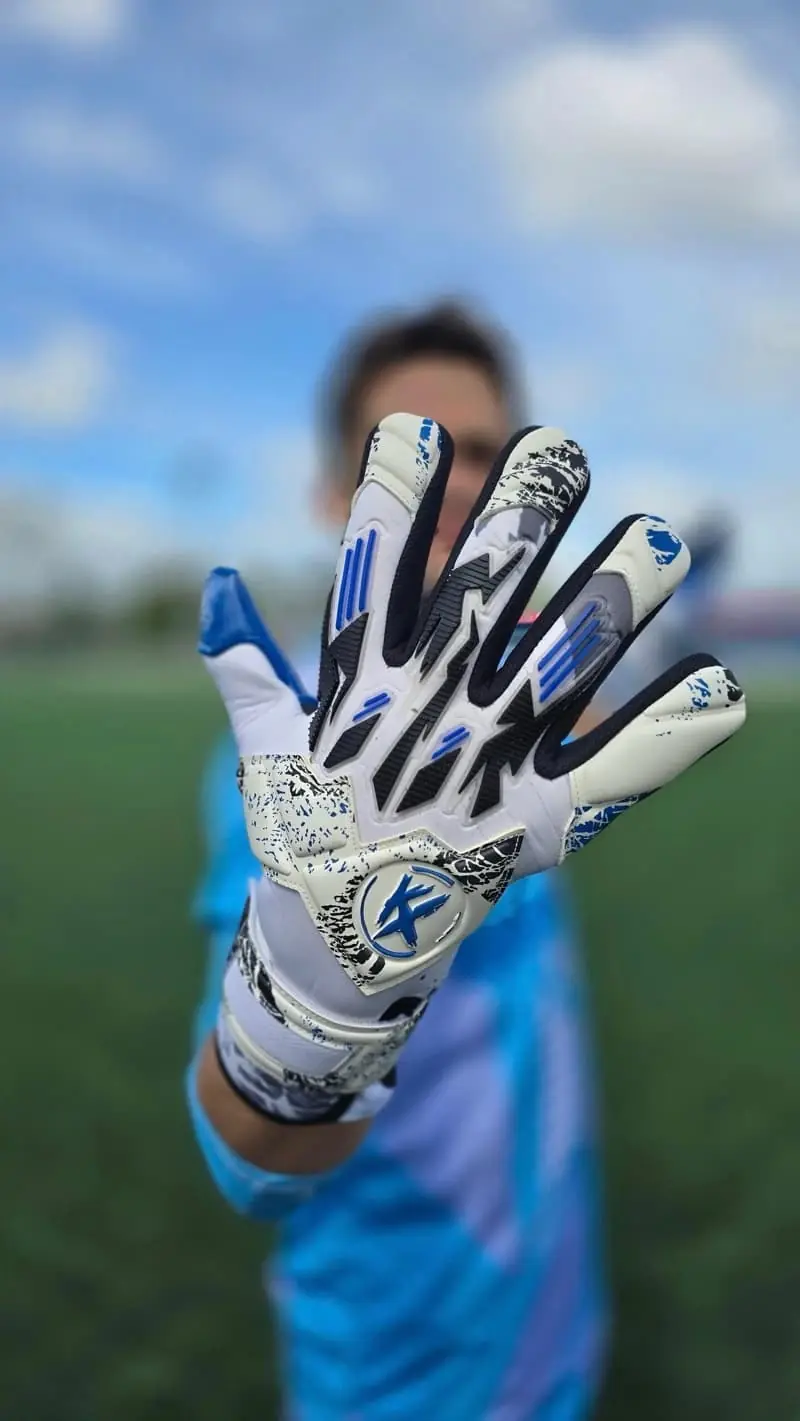
Price, a model name or a player's preference alone does not define a professional goalkeeper glove. It needs to fit your hands, meet your needs on the surface you play on and have clearly stated technical features. Even different cuts within the same range can feel different.
Quick answer
When choosing professional goalkeeper gloves, consider grip, latex information, layer thickness, cut, sizing, wrist construction, flexibility, workmanship, weather suitability and surface compatibility together. A Pro label does not replace these details.
Ten technical features to compare
- Grip: assess the feel of gripping the same ball with clean palms in a controlled trial. Initial tackiness alone does not demonstrate long-term performance.
- Latex information: look for the manufacturer's use and care guidance as well as the material's commercial name. Do not assume similar names across brands mean identical materials.
- Layer thickness: ask whether the stated millimetres refer to latex, backing foam or the complete palm construction. Thickness alone is not a grip rating.
- Cut: try negative, flat, roll finger and hybrid constructions. A close fit is different from a size that restricts your fingers.
- Size: follow the model's measurement method. Do not confuse hand width with palm circumference. You should be able to open and close your fingers comfortably.
- Wrist system: the strap or elastic cuff should hold the glove in place without noticeable pressure. Do not treat the wrist strap as medical support.
- Flexibility and body: check whether the fabric moves with you while putting the glove on, closing your hand and gripping the ball.
- Seams and joins: look for openings, separation or excessive strain between the fingers, around the thumb and at the cuff. Ask the seller before use if you find a problem.
- Weather conditions: read the manufacturer's guidance on wet-weather use. Colour or the model name does not prove rain performance.
- Surface and care compatibility: plan for intensive artificial-surface training, match use and the time needed for natural drying together.
How to keep useful comparison notes
Select each model using its own size chart rather than simply choosing the same size number. Record the surface, ball, weather conditions and length of use. Make short notes about grip feel, finger closure and wrist fit. Do not draw firm conclusions about overall performance from a single save or an advertising video.
Is a match model suitable for every training session?
Soft latex designed for strong grip may develop surface wear more quickly through repeated contact with hard ground. If your workload and budget justify it, separate match and training roles. There is no rule that every player must buy two or three pairs.
Frequently asked questions
Is a Pro label a certification?
The label alone is not independent certification or a test result. Look at the technical description and usage information.
Is thicker latex always better?
Thickness alone does not determine quality. The composition, layer construction and your preferred ball feel also matter.
Related guides
Goalkeeper glove selection guide / Glove size guide
Explore KXSPOR goalkeeper gloves and review the model's technical description, sizing and care information together.